In the rural landscapes of Kagadi District, where farming is both a livelihood and a way of life, communities are embracing innovative solutions to address the growing challenges of climate change. For years, unpredictable rainfall and prolonged dry spells have threatened food security and household wellbeing. Today, however, a quiet transformation is taking root driven by low-cost water harvesting technologies.
Through the Uganda Rural Development and Training Programme under the ESFROMA initiative, the RIWAH Project is empowering smallholder farmers across seven sub-counties. Launched in August 2024, this three-year initiative brings together partners including Kilimo Organic Farmer Learning Centre, Caritas Kampala, Great Lakes Organic Farmers Association, Tanzania Organic Agriculture Movement, Association of Vegetable and Fruit Growers of Zanzibar, and Organic Denmark.
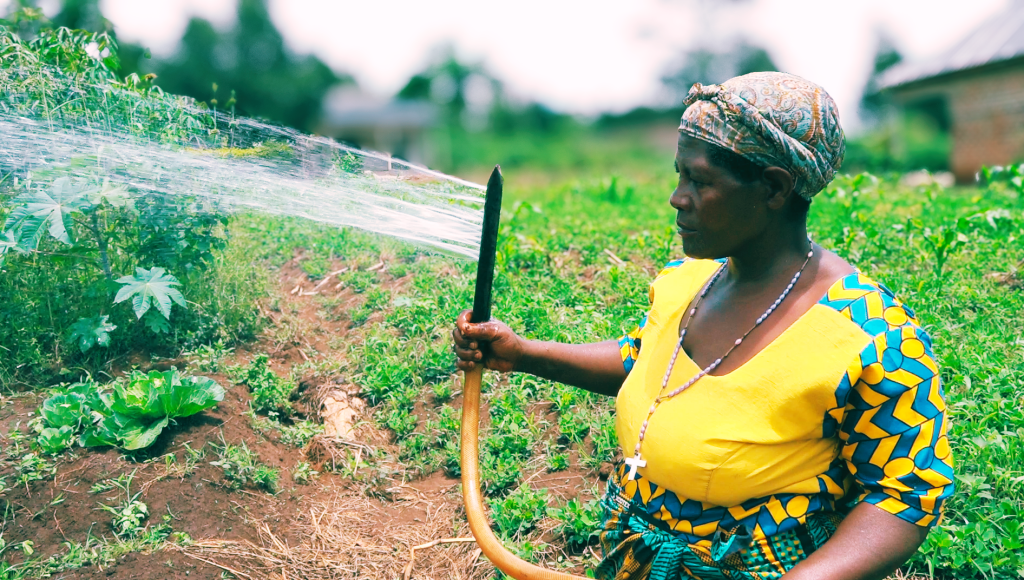
At the heart of the project is a simple but powerful idea of “access to water is a right” By equipping farmers with affordable and practical water harvesting solutions, the project is improving irrigation, boosting food production, and enhancing domestic water access for families in Uganda and Tanzania.
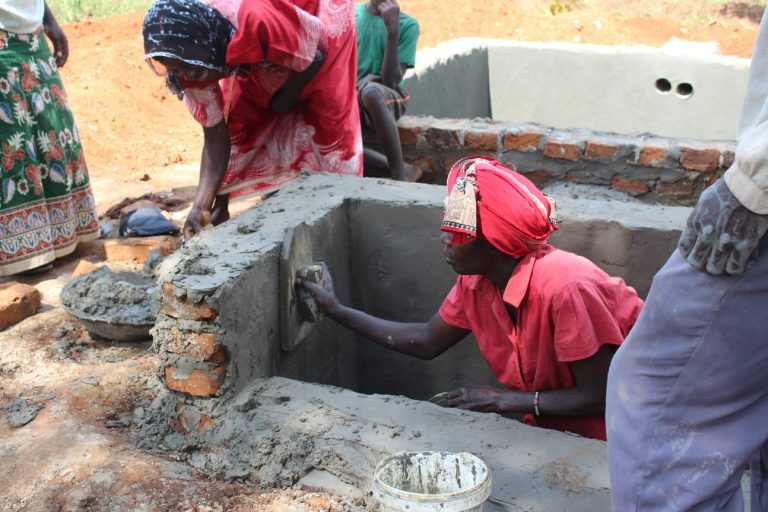
Farmers are being trained in a range of context-specific technologies, including hybrid and drip irrigation systems, contouring and terracing, as well as runoff and hillside water harvesting. Rooted in local knowledge, these approaches are strengthening resilience against climate-related water shortages.
A Story of Transformation
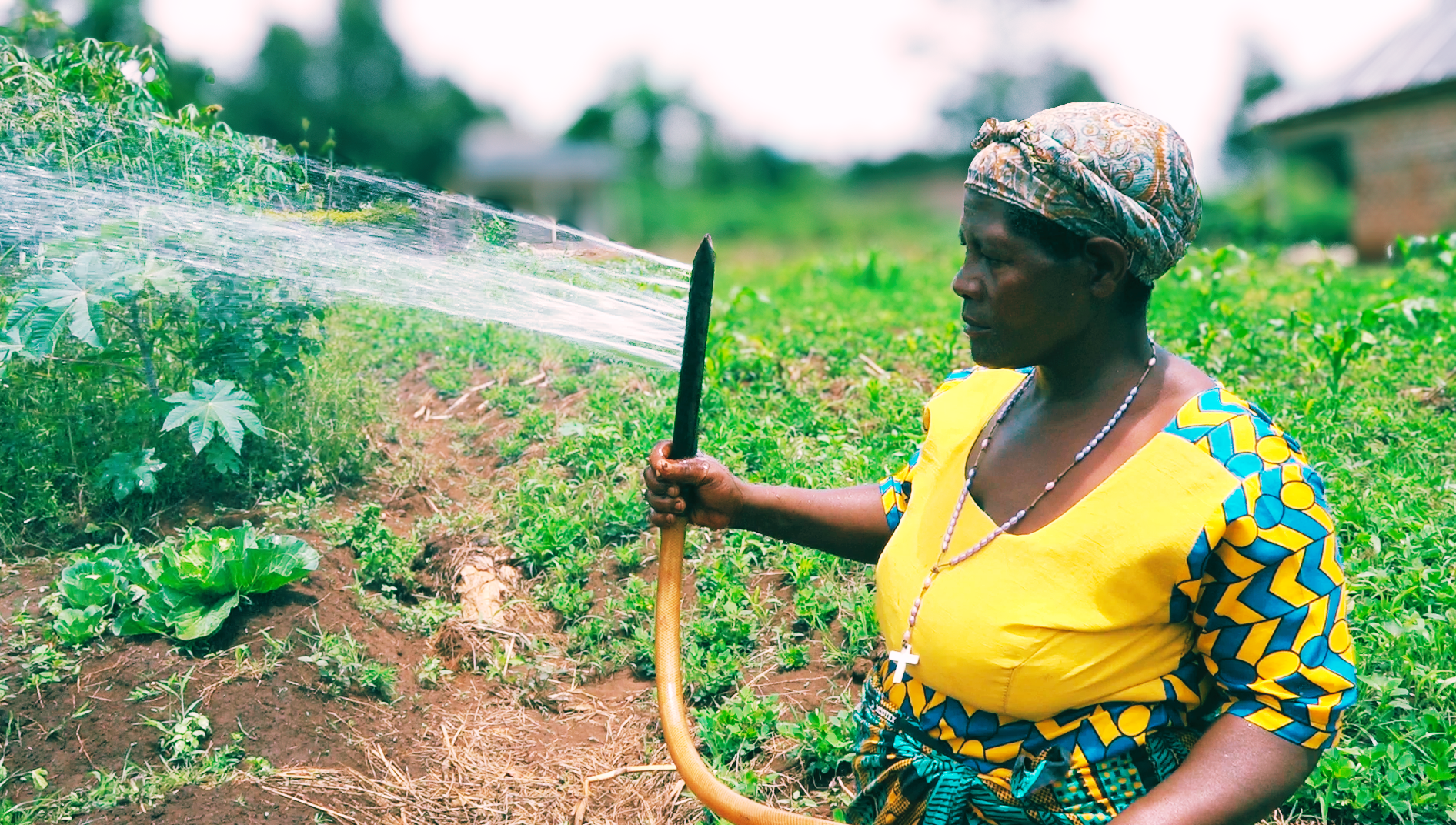
In Burora Sub- County, Nyiramugisha Agatha, a 49-year-old mother of six and a member of the Burora Women’s Leadership Circle Family Farmers Learning Group, is among those whose lives have been transformed. Like many farmers, she previously struggled with unreliable water sources that limited her agricultural productivity.
Today, her story reflects hope and progress. With support from the RIWAH Project, Agatha adopted runoff water harvesting on her small farm. She now captures and stores rainwater, ensuring a reliable supply for her vegetable gardens during dry seasons and the impact has been remarkable.
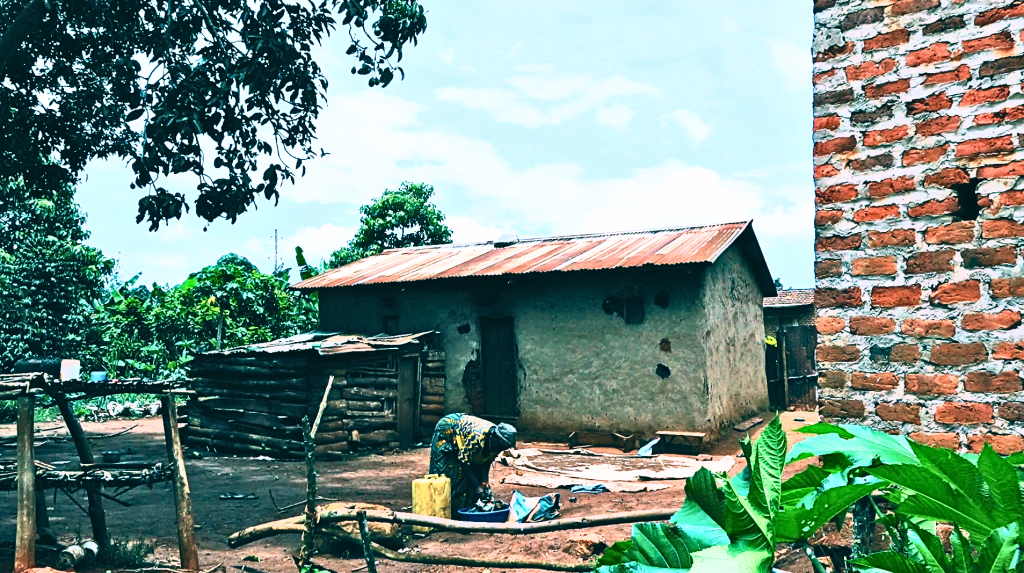
Agatha produces enough vegetables to supply her entire trading centre. Her family now enjoys a more balanced and nutritious diet, while surplus produce provides a steady source of income. The harvested water also supports domestic needs, including washing, cleaning, and improving overall household hygiene.
She expresses deep appreciation to URDT and its partners for bringing the project to her community, noting that all members of her group have embraced these low-cost technologies, significantly improving their farming practices.
Strengthening Communities Through Collaboration
Within the Family Farmers Learning Group, members support one another through rotational visits sharing labour, knowledge, and encouragement. This collective approach has made it easier to adopt and sustain the technologies, while strengthening social bonds and community resilience.
Across Kagadi District, stories like Agatha’s are becoming increasingly common. They highlight the power of simple, affordable innovations and the determination of rural farmers to adapt and thrive despite climate challenges.
As climate pressures persist, initiatives like the RIWAH Project are doing more than addressing water scarcity; they are restoring hope, dignity, and opportunity for smallholder families.