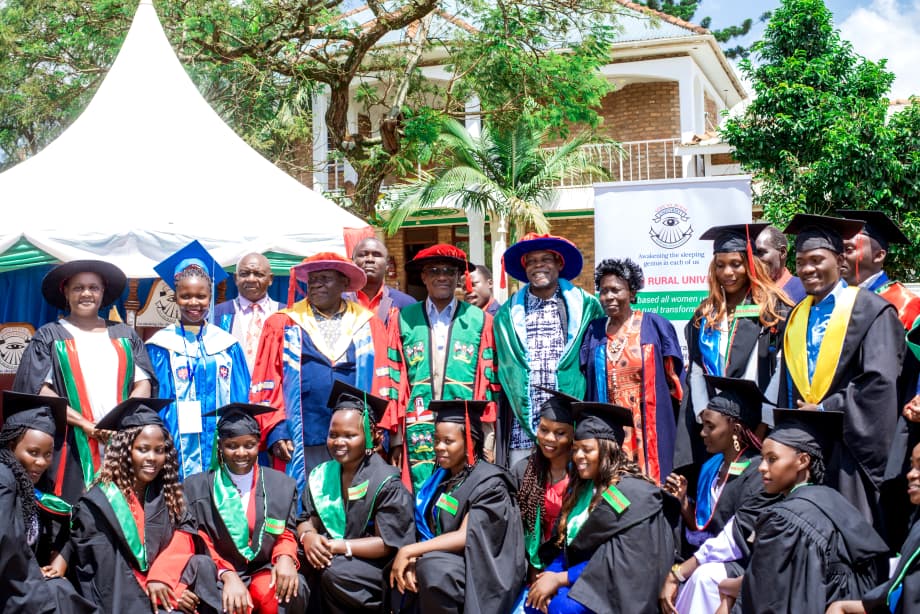
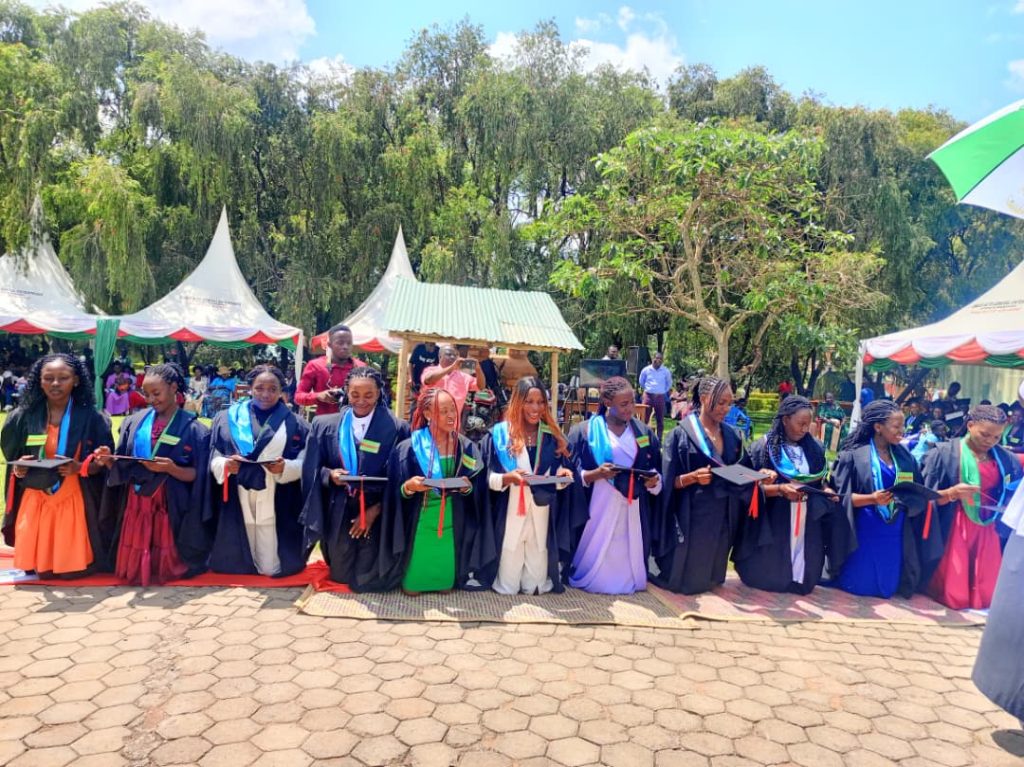
African Rural University (ARU), an all-women value-based institution, has celebrated the graduation of its 11th cohort of Rural Transformation Specialists in a colourful ceremony attended by leaders from academia, local government, civil society, and international development partners. The event, held under the theme “Leveraging Artificial Intelligence and Indigenous Knowledge for Sustainable Rural Transformation,” was particularly historic as ARU graduated its first-ever cohort of the Bachelor of Science in Sustainable Agriculture (BSSA) on the 21st of November, 2025.
Seventeen graduates received degrees in Rural development and in Sustainable Agriculture with Atugonza Doreen (CGPA 4.7) and Beatrice Acio (CGPA 4.4) emerging as best performing students in the two courses respectively.
The guest speaker, Dr. Robert Jjuuko of Gulu University, urged the graduates to become lifelong learners guided by the principles of learning to know, do, and live together. He praised ARU’s unique educational model, including the involvement of Traditional Wisdom Specialists who preserve community knowledge, and encouraged the university to establish an artificial intelligence hub to support rural transformation. He noted that while Artificial Intelligence offers opportunities in areas such as weather prediction and disease diagnosis, human intelligence remains central and AI should serve as a complement.
ARU Council Chairperson, Prof. Samuel Kyamwamwa, congratulated the graduates and reminded them that they are creators and visionaries entrusted with awakening the sleeping genius within rural communities. He celebrated ARU’s recent global achievements, including the recognition of Vice Chancellor Dr. Mwalimu Musheshe as Vice Chancellor of the Year and ARU’s first-place win in the Zairi International Community Engagement Award, selected from over 7,000 universities worldwide. Prof. Kyamwamwa also highlighted that ARU is already applying AI in community engagement, citing moments when students demonstrated to farmers how to use AI tools on their phones to scan crop diseases and identify organic remedies. He noted that a recent paper by Dr. Musheshe on harnessing generative AI for rural transformation affirms ARU’s leadership in this area.

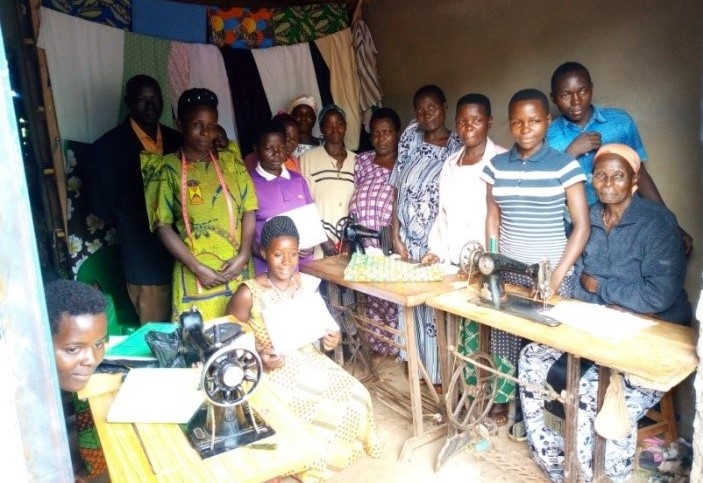
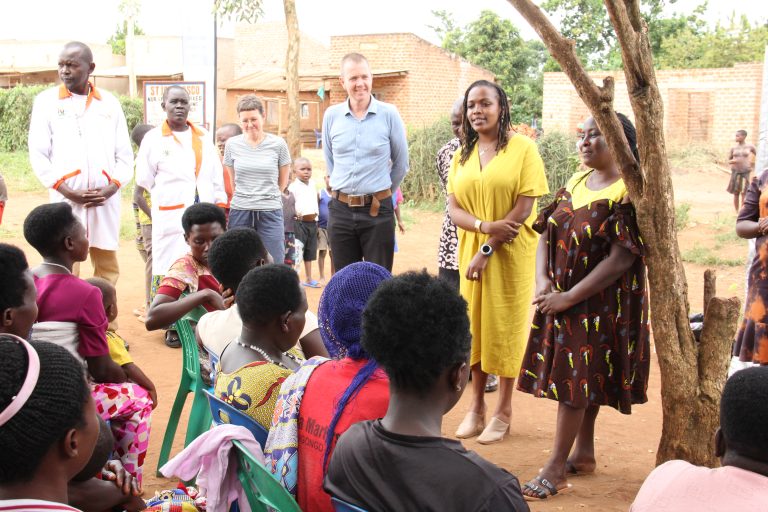
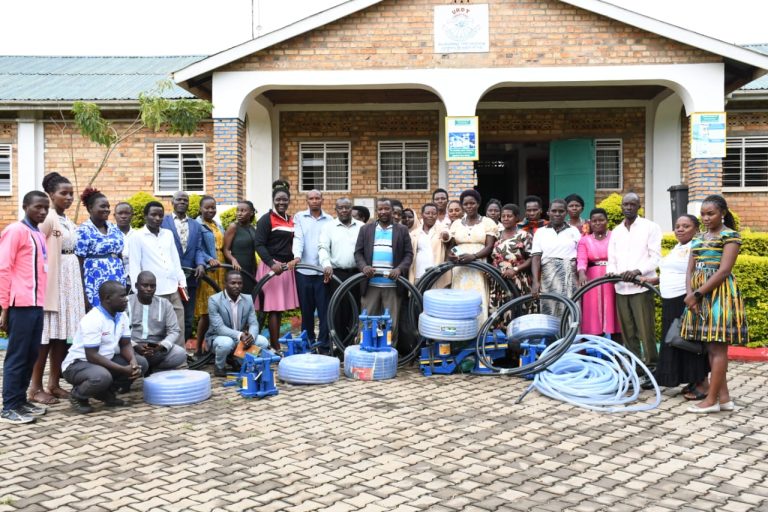
In his address, Dr. Musheshe emphasized the tangible impact ARU graduates have created across Uganda. Deployed in 20 districts and four refugee settlements, they have established 702 learning centres under the URDT–Institute’s Skilling Programme of the Young Africa Works initiative. He announced that ARU is now entering a new phase with the establishment of a graduate school that will offer master’s degrees, and revealed that some members of the 2025 class have already been absorbed into university roles.
Chancellor Emeritus Justice Ezekiel Muhanguzi, in a speech delivered by University Secretary Ms. Rose Keishanyu, congratulated the graduates and thanked ARU’s partners; the African Food and Peace Foundation, Mustard Seed Trust, staff, and council for supporting the university’s mission.

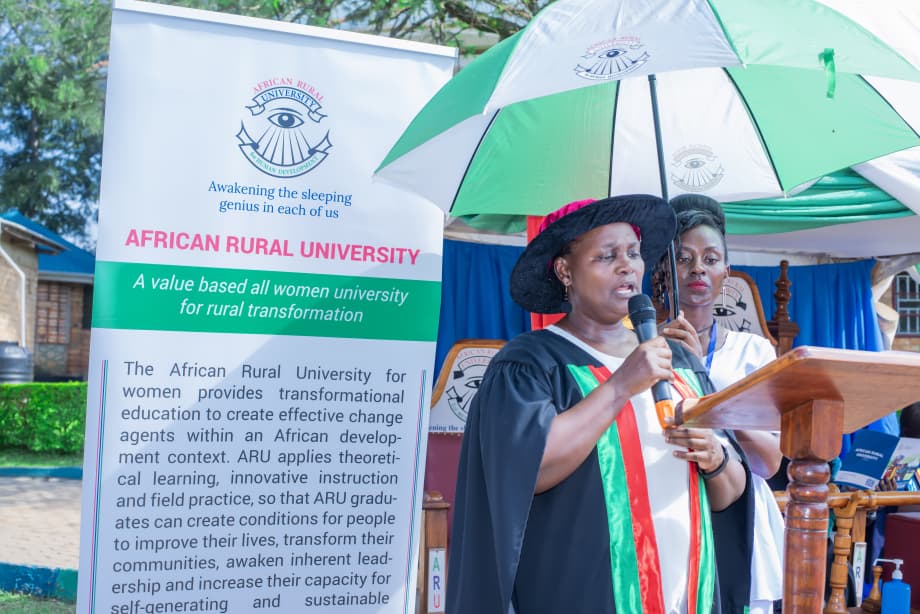
Every graduating student completed Community-Based Participatory Action Research, field practicum, project work, and a one-year internship under URDT’s Continuum of Education. With a curriculum designed to be 40% practical and 60% theoretical, ARU goes beyond conventional university training. It nurtures visionary women who do not simply seek employment but are equipped to create jobs, lead transformation, and apply consciousness-based learning to drive sustainable development in rural communities.
To explore more about the graduates’ impact, readers are encouraged to view the ARU Graduation Magazine 2025 at www.aru.ac.ug